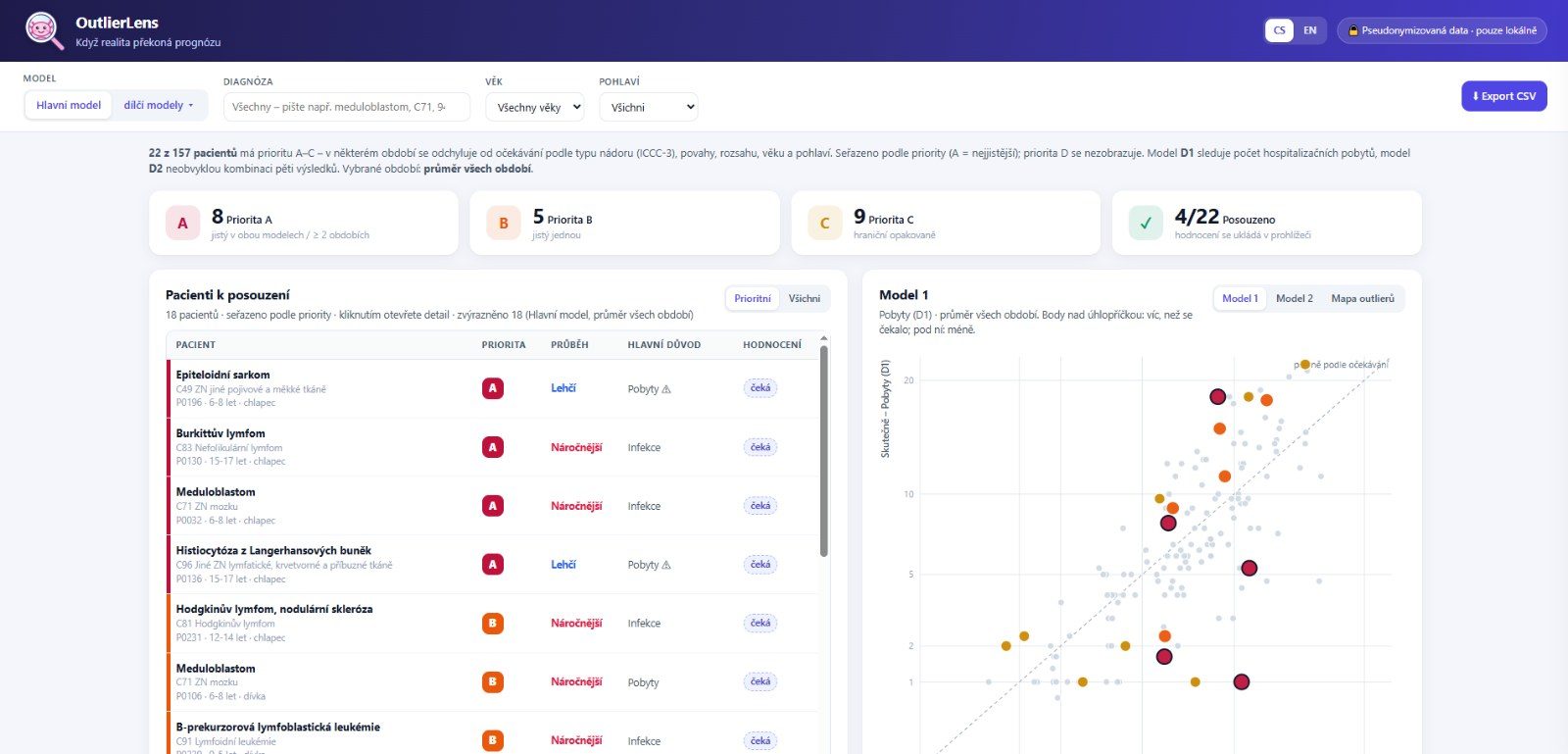
The two models identify patients whose care following diagnosis differs from that of similar patients. The website ranks them in order of priority from A to C and explains why.
Children with cancer undergo treatment in different ways: some are in hospital frequently, whilst others are hardly ever there. Our project is looking for patients whose course of illness differs significantly from that of similar children – whether for the worse or for the better – so that a doctor can examine them first. For each child, we calculate how many hospital admissions, days spent in hospital, infections and other events we would expect to see in similar children with the same cancer and of the same age, and we compare the result with the actual figures. We look at the first three months, the first year and the entire follow-up period from diagnosis. Children who differ the most are given a priority rating of A, B or C, with A being the highest. On the website, for each patient you can see why they differ, what happened to them and when, and what their laboratory results were. The doctor then marks the case as ‘of interest’, ‘for discussion’ or ‘data error’ and can export it. We work with pseudonymised patient data, which is not uploaded to the internet, so the website contains only a code. In the next step, we want to verify the findings with doctors, simplify the website and include treatment in the calculation so that we can distinguish between poorer care and a more severe case.
- Had before
- nic
- Use of AI
- Odlehlé pacienty hledáme vlastními statistickými modely, ne LLM. Model 1: regrese a kNN předpovídají počet hospitalizací podle diagnózy a věku. Model 2: totéž pro 5 výsledků (hospitalizace, dny v nemocnici, neutropenie, infekce, ambulance). Shluky: Wardova metoda, vizualizace PCA. Data: pseudonymizované epizody péče, diagnózy a laboratoř.
Aby se model nemýlil: (1) odchylka je „jistá" jen když ji potvrdí regrese i kNN a výsledek je stabilní při změně vah; (2) každý nález ukazuje pozorováno vs. očekáváno a upozornění na kvalitu dat (např. možná léčba jinde); (3) model nic nerozhoduje, jen řadí případy k posouzení lékařem, který je označí jako zajímavý / k diskusi / artefakt.
Při vývoji kódu nám pomáhal AI asistent; výsledky modelů jsme kontrolovali sami. - Impact
- Model nenahrazuje lékaře, ale zkracuje hledání: místo procházení všech pacientů dostane tým krátký seznam (v našich datech 22 z 157 s prioritou A–C) s důvodem a časovou osou.
Odhad přínosu: výrazně méně času na ruční prohlížení případů, a to jak horších, tak lepších než čekáno. Horší případy mohou odhalit komplikace nebo chyby v péči. Ty lepší ukazují, co funguje, a zachytí i chyby v datech nebo léčbu mimo naše data.
Konkrétní čísla (ušetřené hodiny, dřívější záchyt) zatím nemáme změřená. Dalším krokem je ověření s lékaři a použití jejich hodnocení ke zlepšení modelů. - Who benefits
- Research
- InterSystems technologies
- No
Machine translation from Czech
- Team
- Axolotl — Jakub Henzl, Jan Henzl
- Challenge
- When reality beats the prognosis · Brno