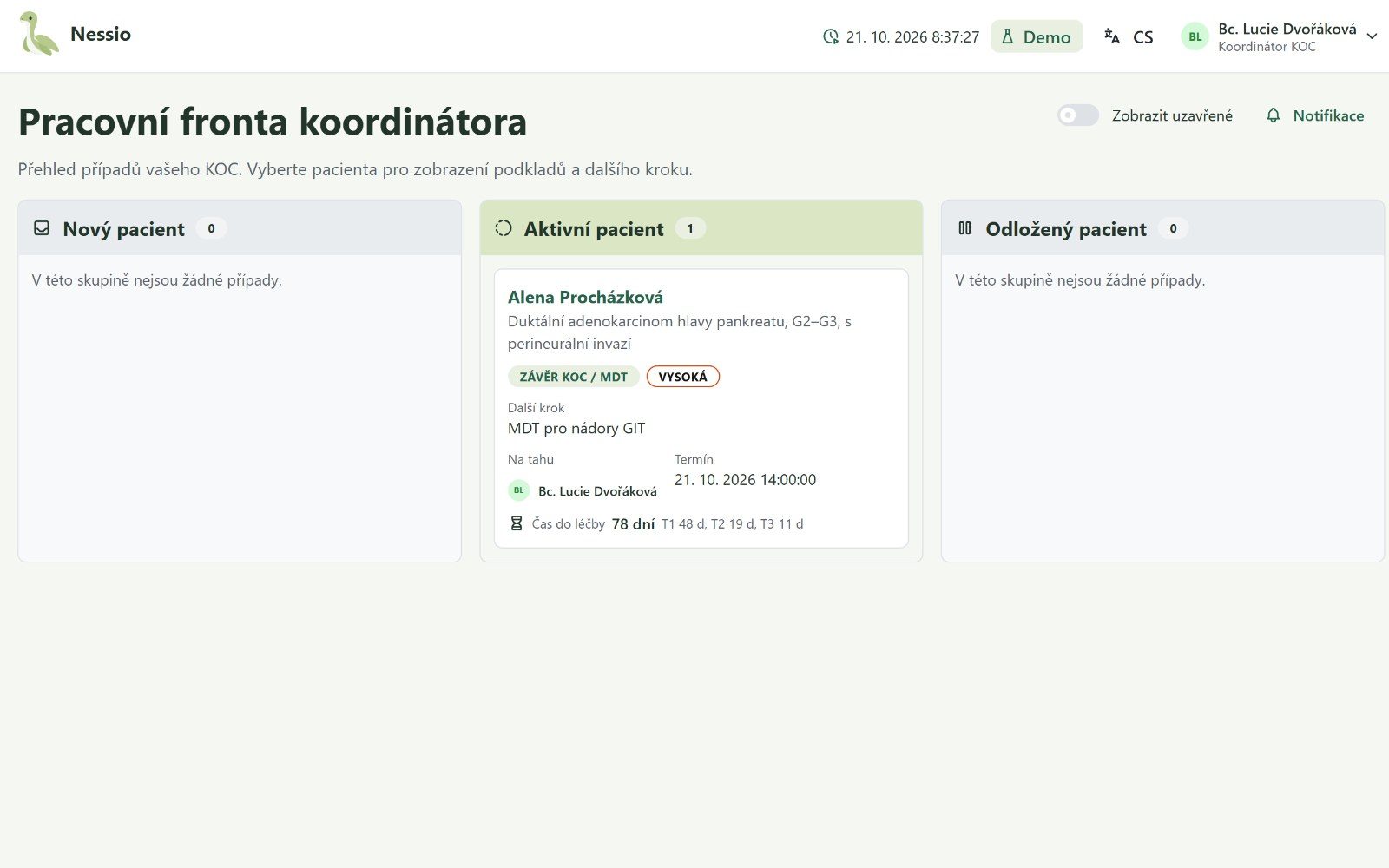
Using AI, Nessio links medical reports, identifies missing data and monitors the next steps in cancer care.
The problem
When a patient is referred to a comprehensive cancer centre, documentation arrives from various departments, in various formats and is often incomplete. The coordinator must track down results, arrange the necessary investigations and prepare the documentation for the multidisciplinary team (MDT). Meanwhile, the referring doctor needs to know how care is progressing and what the team has decided.
Solution
Nessio brings this entire process together in a single application. The doctor selects the comprehensive cancer centre and uploads existing reports. The AI uses these to prepare a structured handover, flags any missing or conflicting data, and attaches citations from the original documents to the extracted information. The doctor reviews the draft and sends it off. The coordinator then supplements the documentation and manages the next steps in the care pathway: for each step, they can see who is responsible for it, where and when it is due to take place, and what is pending. For the MDT meeting, the app compiles a clear report using only the information available as of that date. Any results added later will not alter this document. After the meeting, the coordinator records or uploads the conclusion and sends it to the GP, who confirms receipt. The AI prepares the documentation; the clinical decision and confirmation remain with the human.
Testing
In addition to the data from the initial case, we created a second synthetic case involving a patient with rectal cancer to verify how the application functions with a different diagnosis and other issues in the documentation. We deliberately included conflicting information about an allergy, an incorrect year of birth, a histology report dated prior to the sample collection, and missing tests relevant to the MDT. We are also verifying that the application does not generate false alerts and does not fill in data by estimation; for example, it does not calculate height from weight and BMI where these are not specified. We use both cases to compare models and check the quality of data extraction.
Implementation Status
We have successfully implemented the main workflow, from the request through AI handover and coordination to the confirmed delivery of the conclusion. We have added a search function for documentation with citations, ICD-10 code suggestions, a change audit, and an interface for AI agents. We store data in InterSystems IRIS for Health and utilise its vector search and FHIR server. The basic workflow involves a doctor submitting documentation, which is then processed by a coordinator. FHIR, with its European and Czech profiles, enables potential integration with other systems.
Next steps
The next step is to directly request and supplement information from GPs and external partners, such as specialists, laboratories or other hospitals. The recipient would receive the request within the application and attach a reply or the missing report. We also aim to expand the scope of corrections and documentation management: editing laboratory results and examinations, removing incorrectly uploaded documents, or reverting to the original value following a manual change. Further development may include recurring MDT meetings, processing of scanned reports, AI suggestions for further tasks, actual email and SMS notifications, and the forwarding of information to the reviewing doctor. For day-to-day operations, we still need to implement proper login and authorisation procedures and test the application with coordinators and doctors in practice.
- Had before
- Nic
- Use of AI
- V Nessio používáme GPT‑6.1 Sol v evropském nasazení Azure k vytěžení lékařských zpráv do strukturované předávky, hledání chybějících a rozporných údajů a návrhům shrnutí či otázek pro MDT. Multijazyčný model paraphrase-multilingual-mpnet-base-v2 běží lokálně a spolu s InterSystems IRIS Vector Search umožňuje vyhledávání v dokumentaci s citacemi a návrhy kódů MKN‑10.
Pracujeme s daty ze zadání a vlastním syntetickým případem jiné diagnózy se záměrnými rozpory a chybami. Na obou případech porovnáváme modely a kontrolujeme extrakci, citace i nalezené problémy.
U vytěžených hodnot ověřujeme citaci v původním dokumentu. Běžný kód navíc kontroluje například datum výsledku vůči datu odběru nebo soulad rodného čísla s datem narození a převádí hodnoty na sjednocené jednotky. Nedoložené hodnoty odmítáme nebo označujeme, chybějící údaje nedoplňujeme odhadem. AI návrhy uživatel zkontroluje přímo proti zdroji; ruční opravy se zachovají i při opakované extrakci. - Impact
- Největší dopad očekáváme v menší administrativě a rychlejší přípravě pacienta na MDT.
Pro pilot odhadujeme:
- Úsporu 15–30 minut na případ při přepisování údajů, procházení zpráv a sestavování podkladů. Při 100 pacientech měsíčně jde o 25–50 hodin práce lékařů a koordinátorů, po započtení kontroly AI výstupu.
- Zkrácení zbytečných prodlev o jednotky dnů u případů, které dnes čekají kvůli přehlédnutému výsledku, nejasné odpovědnosti nebo nevyřízenému požadavku.
- Méně přehlédnutých nesrovnalostí a ztracených kroků díky citacím, kontrolám rozporů, přehledu úkolů a potvrzení převzetí závěru. - Who benefits
- Patients and their families, Doctors and nurses, Hospitals and care providers
- InterSystems technologies
- Yes — FHIR R4 v InterSystems IRIS for Health používáme pro standardizované sdílení klinických dat s evropskými a českými profily. Předávku, výsledky, úkoly a původ údajů promítáme do FHIR zdrojů. Závěr MDT publikujeme jako dokumentový Bundle s odkazem na PDF. Celý případ lze exportovat přes Patient/$everything. Přijímáme také žádanky ve FHIR Bundlu; přiložené zprávy procházejí AI extrakcí.
Machine translation from Czech
- Team
- FIT/S — David Bambásek, Jan Beringer, Jan Černý, Martin Štrobl
- Challenge
- Patient journey without information loss · Prague